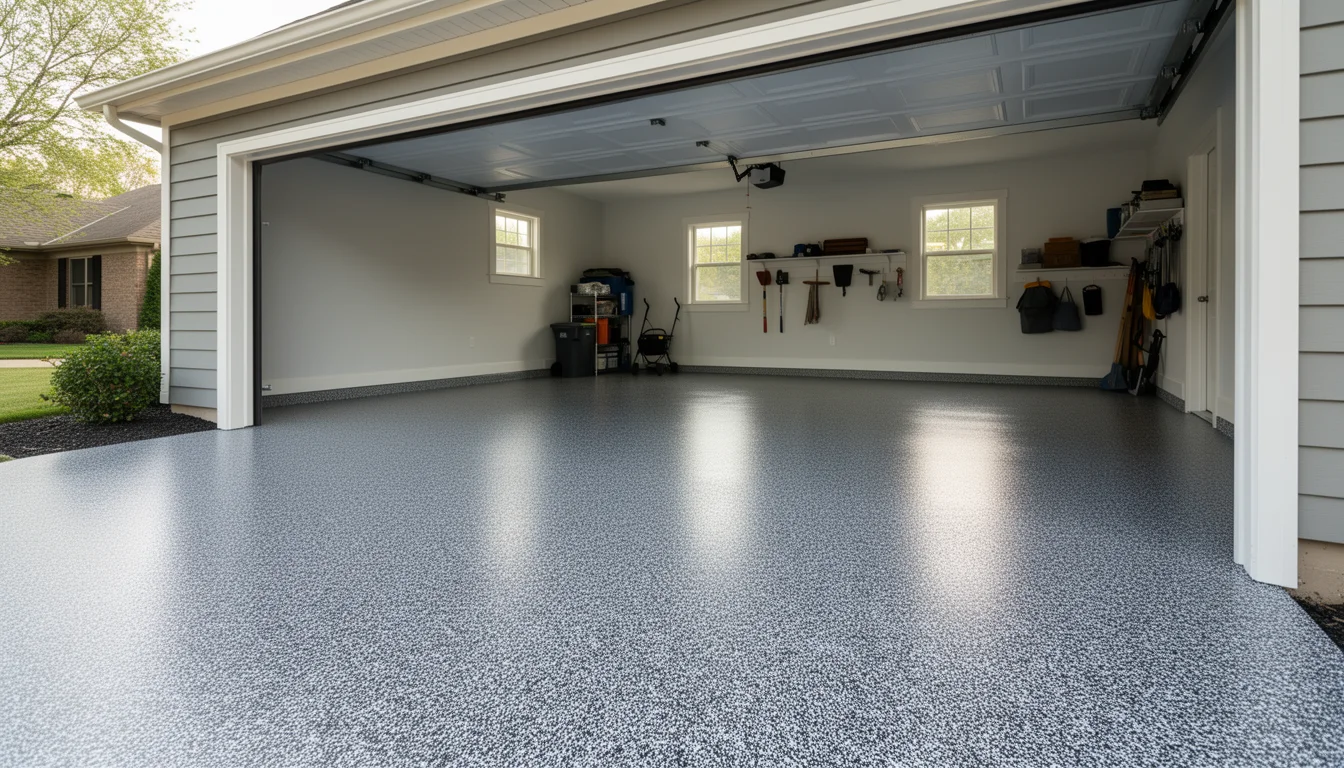
Polyaspartic Garage Floor Coatings in Tulsa, OK
Polyaspartic garage floor coatings are an option for Tulsa homeowners comparing cure times, exposure to sunlight and decorative finishes. Depending on the specified system, polyaspartic can be used as a protective topcoat over an epoxy base or as part of another compatible combination of layers.
The product name alone does not tell you how the slab will be prepared, whether an old floor can be recoated or when a vehicle can return. Start with the condition of your garage and the complete system, then compare the finish, schedule and price. A fast-curing material still needs a properly prepared surface.
A coating choice for an active garage
When the garage is used every day, the time before walking and parking matters. Polyaspartic products can offer shorter cure times than some alternatives, but the actual schedule comes from the selected product, site conditions and the work beneath it.
Sunlight at an open garage door is another consideration. UV-resistant polyaspartic products are available; confirm the performance of the proposed product rather than assuming every coating has identical properties. Decorative flakes, a compatible base and the final topcoat work together to create the finished floor.
- Compare the full system, including preparation and base layers.
- Choose texture and sheen with a finished sample.
- Separate application time from time before parking.
- Assess an existing coating before adding a topcoat.
Request an Estimate
Tell us a little about your garage. RankEstate handles your inquiry and confirms installer availability.
Thank you—your request is in.
We’ll call you to discuss your garage floor project and confirm service availability.
No need to submit again. If you’d rather talk now, call (918) 293-3341.
A coating system for a working garage
Polyaspartic coatings are used in garage-floor systems as a finish or topcoat. If your garage is for parking, storage and weekend projects, the important choices are the complete system, the texture underfoot and the time before you can use it again.
Many polyaspartic products offer UV resistance and faster curing than some alternatives. Those features vary by product. A fast topcoat still needs a properly prepared base, and a floor ready for walking may not yet be ready for tires or a heavy toolbox.
What your installation should cover
Check the concrete and any existing coating
Before choosing a finish, the installer should assess moisture, oil, cracks and the condition of the slab. An old painted or epoxy floor may need abrasion or removal. If the finish is peeling, start with our full-garage recoating and removal page.
Specify the layers
A polyaspartic topcoat may be used over a compatible epoxy base. That does not make the floor one material throughout. Get the primer, base coat, decorative layer and topcoat named in the estimate so you know what is being installed.
Choose the appearance and traction
For a speckled finish, compare decorative flake options using a finished sample. Look at color, gloss and texture together. Ask how the selected surface behaves when wet and what cleaning it needs.
Agree on the return-to-use schedule
Get separate times for walking, moving storage back and parking. Product, temperature, humidity and the condition of the floor can change the schedule. Confirm access arrangements before emptying the garage.
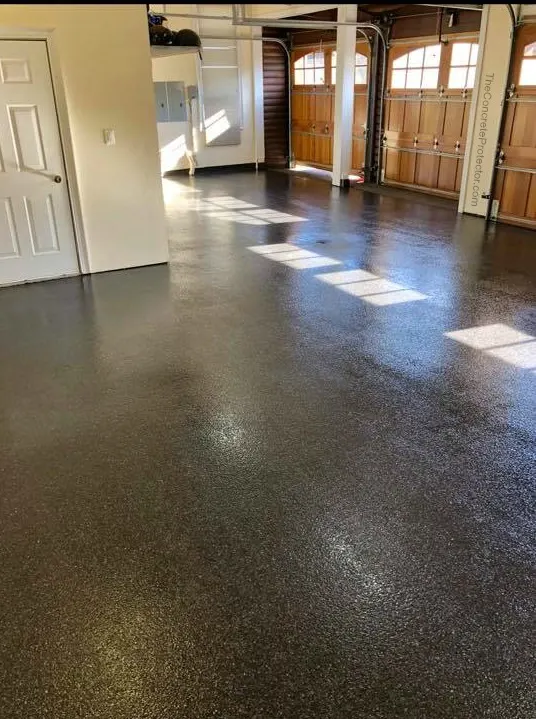
Polyaspartic or epoxy?
If you already want a polyaspartic finish, your next step is an assessment and system-specific estimate. If you are still choosing, our epoxy versus polyaspartic guide compares the decisions without treating them as mutually exclusive materials.
A useful quote explains why the system suits your floor. “Polyaspartic” on its own does not tell you how the concrete will be prepared, which repairs are included or what a warranty covers.
Details that make the estimate more useful
- Approximate length and width of the garage, including any steps you want coated.
- Bare concrete or an existing finish, and any peeling, stains or damp areas.
- Your preferred color and texture, plus how you use the space.
- The ZIP code and when you need access to the garage again.
See the cost and scope checklist for the items to compare. An installer may need to see and test the slab before confirming the price.
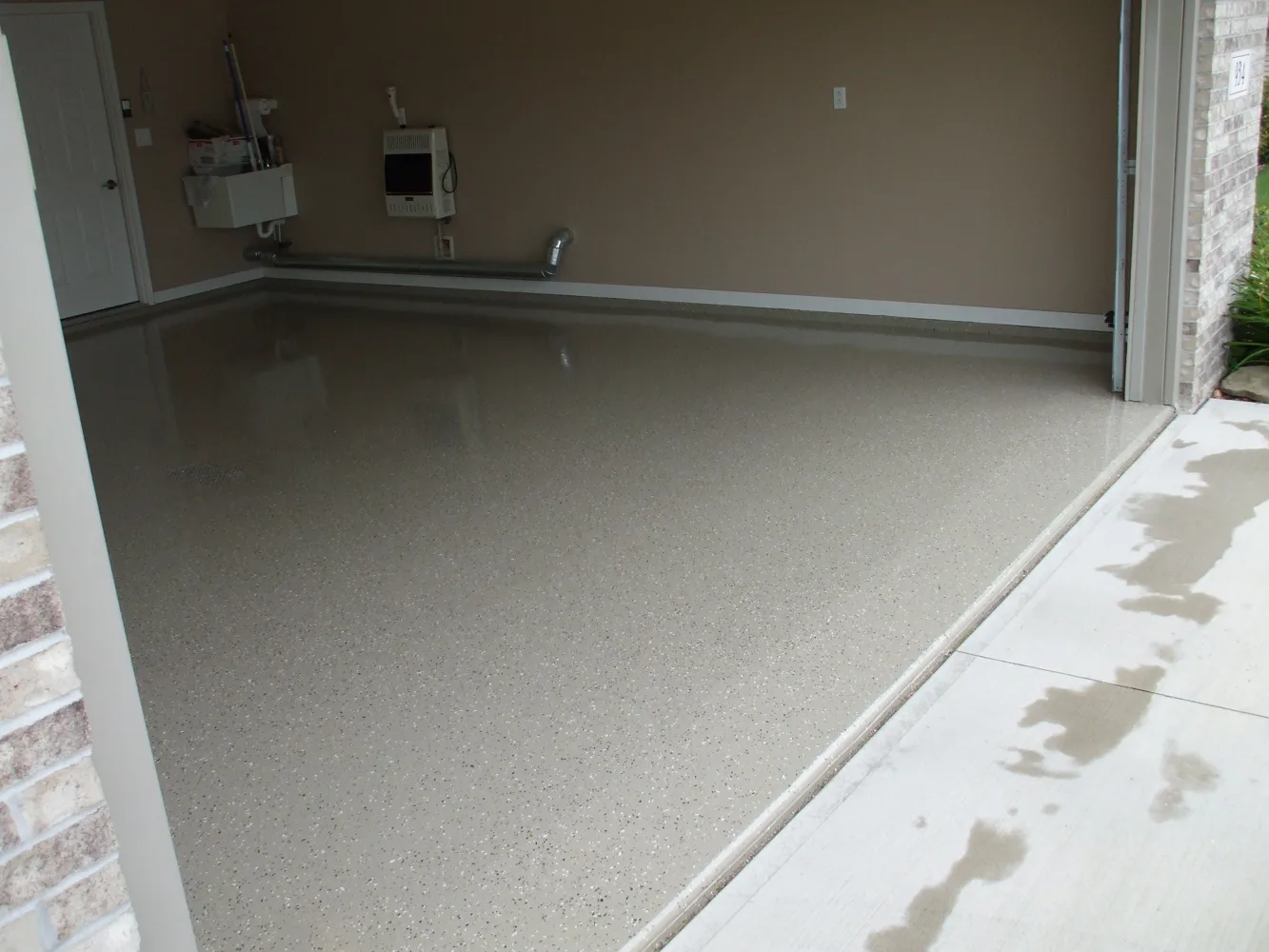
Material and finish examples. Photo sources and credits.
How the installation is planned
1. Check the slab and existing finish
The assessment covers moisture, surface contamination, cracks and any coating already present. A sound epoxy base may be a candidate for a compatible topcoat after preparation. Peeling or uncertain layers call for a different scope, potentially including removal.
2. Specify compatible layers
A proposal should identify the base, optional decorative broadcast and topcoat rather than simply saying polyaspartic floor. Compatibility, thickness and application conditions depend on those products. The desired appearance and the garage’s use help narrow the specification.
3. Prepare and apply within the product window
After the required cleaning, repairs and mechanical preparation, each layer is applied according to its instructions. Working time and time between coats are product-specific. Interruptions may require additional preparation before another layer can be applied.
4. Confirm return-to-use milestones
Walking, vehicle parking, heavy storage and wet cleaning can have different release times. The installer’s written instructions should cover all the activities you need. A promise of one-day installation does not by itself mean the garage is ready for every use that evening.
When the garage has a hard return-to-use date
If a vehicle must be back inside by a particular day, include that deadline in the inquiry. The schedule needs room for preparation, application and the product’s return-to-use requirements. A fast-curing topcoat cannot shorten repairs or make an unsuitable slab ready.
Separate each kind of access
The estimate should distinguish walking, returning vehicles, wet cleaning, and heavy tools. Slab temperature, humidity, surface preparation, application method, and the named product can move those windows. If a garage must be usable by Friday, give the date and the actual use required so the proposed system can be evaluated against the written release instructions.
Polyaspartic over an old floor requires a bond decision
Consider a garage with an old epoxy that looks intact from the doorway but is glossy, worn along tire paths, or unknown in composition. A polyaspartic topcoat may be compatible only after the existing film is checked for bond, contamination, moisture, and surface profile. Water beading can signal a sealer or paint; loose edges, peeling, or multiple uncertain layers can move the job into removal and rebuilding.
Put the preparation in the quote
For a sound floor, the scope may include degreasing, mechanical abrasion, vacuuming, and preparation for the named system. For a failing floor, it should separate removal, dust containment, exposed-concrete repairs, and any moisture decision. The word polyaspartic does not describe that work by itself.
Write the new system as layers
Have the estimate identify the primer or base, optional decorative flake or texture, polyaspartic topcoat, sheen, and edge or threshold treatment. If the old coating is broadly failing, the garage floor recoating page covers that problem more directly. A material-specific quote is useful when it explains both what will bond to the floor and what the finished garage will require.
Cost and scheduling for a Tulsa garage
A polyaspartic estimate should cover preparation, concrete repairs, the base coat, decorative material if selected and the topcoat. Compare the stated products and scope before comparing totals. A topcoat over a suitable existing floor is a different project from removing a failed coating and rebuilding the entire system.
Measure the garage’s length and width and note any steps, fixed cabinets or appliances. For a nearby project in Broken Arrow, Bixby or Owasso, include your ZIP code so availability can be checked. See the cost and estimate guide for a comparison checklist.
Questions before you book
Is a polyaspartic floor installed in one day?
Some systems can be installed quickly, but that is not a promise for every floor. Removal, repairs, slab conditions and the specified products determine the work and cure schedule.
Can it go over an epoxy floor?
A compatible polyaspartic topcoat can be used over epoxy. An existing floor still needs a bond, condition and preparation assessment before a recoat can be recommended.
Does it stop moisture coming through concrete?
Do not assume the finish is a moisture treatment. The installer needs to test the slab against the chosen product’s requirements and explain any separate work.
Can I request a flake finish?
Yes—tell us the look you want. Color, flake blend, texture and product availability need confirmation with the installer.
Talk about your Tulsa garage floor
Share the size, current condition and finish you have in mind.